

The Hoover Press just released two books that I co-edited, that readers may find interesting
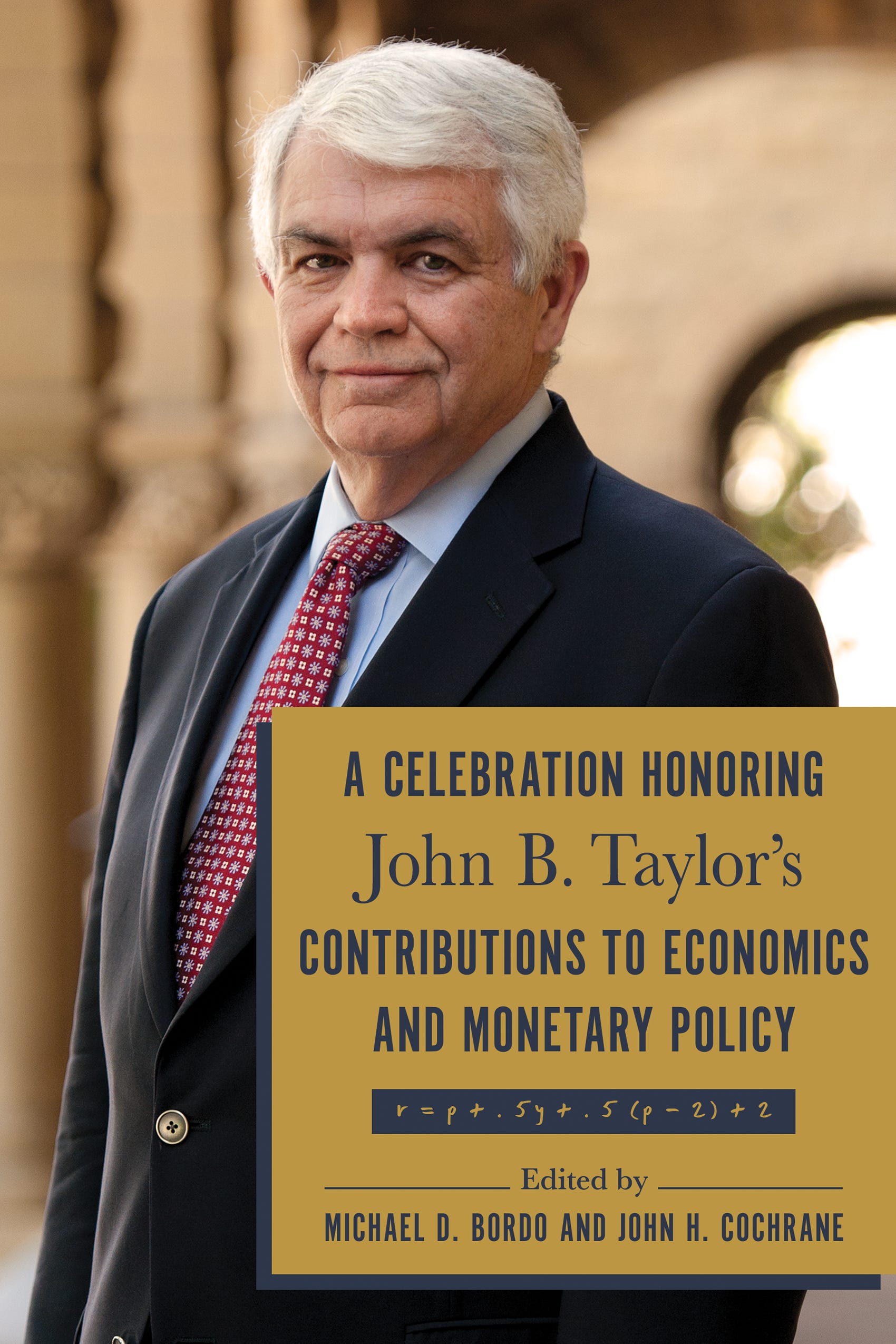
The Celebration Honoring John Taylor collects essays resulting from a one-day conference we had last fall. You can read the chapters for free at the link too, or order the hard copy. (Stanford and Hoover colleagues, I have a lot of free copies in my office if you want one.)
My contributions include the overview, “John Taylor’s Contributions to Economics and Monetary Policy” with Michael Bordo and Jon Hartley, and “The Taylor Rule in Macroeconomic Theory.” The rule went a lot further than Taylor envisioned, giving stability in old Keynesian models, local determinacy in new-Keynesian models, and buffering shocks in fiscal theory models. “The Taylor rule is always the answer, though the questions keep changing” is praise in this context. Taylor often made that point: The rule is not exactly optimal in specific models but it is pretty darn good in lots of models. The Taylor rule also recommends acting in response to actual inflation and output rather than forecasts. Given how many mistakes the Fed has made lately in reacting to false forecasts, that might be pretty good advice.
I don’t mean to slight the many other great contributions. You will learn a lot about macro and monetary economics from this lovely book.
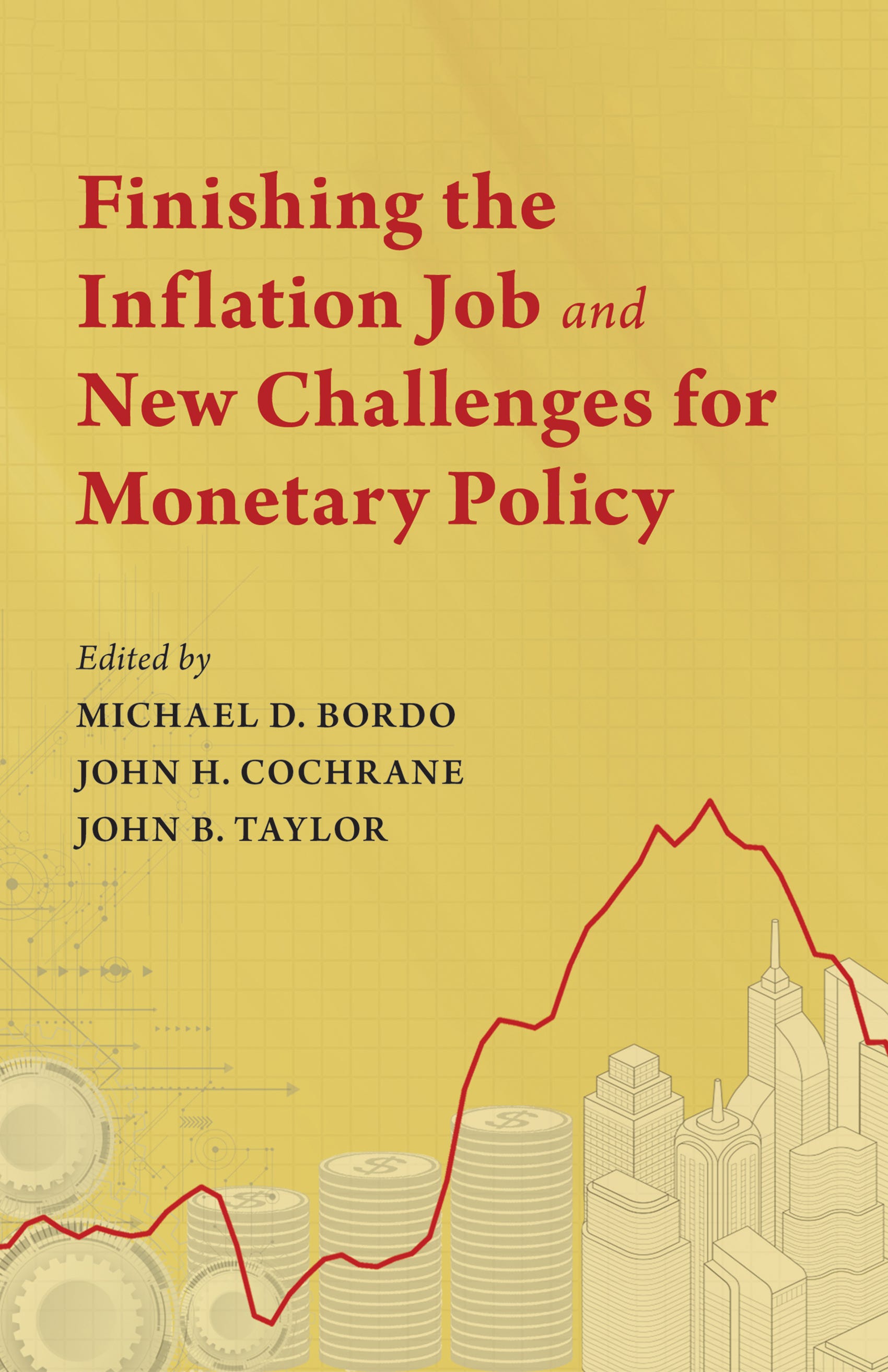
Finishing the Inflation Job and New Challenges for Monetary Policy is the conference volume resulting from the 2025 Hoover Monetary Policy Conference with that title. The conference website has videos. Again, you can find the chapters for free at the link, and Stanford colleagues are welcome to stop by and clean out the box in my office.
The first chapter contains particularly thoughtful comments from Chris Waller on central bank independence, from Loretta Mester on the policy process, a lovely essay from Charlie Plosser, who sadly passed away just after this conference, and a thoughtful statement from Kevin Warsh that Fed-watchers will want to read. Digital assets, private credit, geoeconomic risks, fiscal pressures on monetary policy, the ever-revealing policy panel, and a lovely dinner talk on history all are relevant today. I guess monetary policy doesn’t move much faster than book publishing! My contribution, “Fiscal Constraints on Monetary Policy” packages thoughts on a substantial and unrecognized challenge ahead. It’s 1951, not 1972.
"The rule went a lot further than Taylor envisioned, giving stability in old Keynesian models, local determinacy in new-Keynesian models, and buffering shocks in fiscal theory models." Will take a look
Please do send a copy to The White House. Perhaps highlight the key passages