

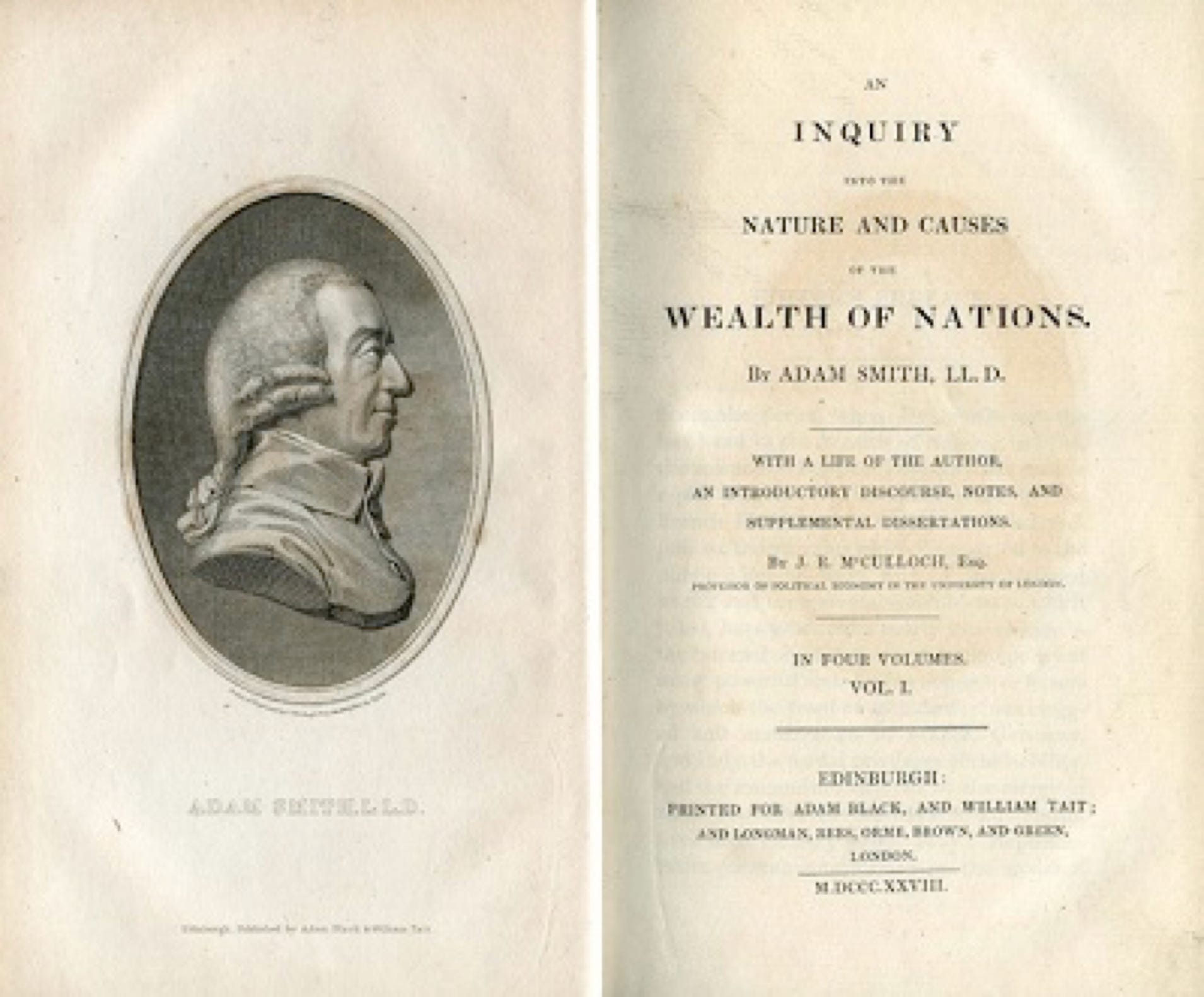
Last week was the 250th anniversary of the Wealth of Nations. For the Hoover “weekly rants” I looked up what must be the top two Smith quotes:
It is not from the benevolence of the butcher, the brewer, or the baker that we expect our dinner, but from their regard to their own self-interest. We address ourselves not to their humanity but to their self-love, and never talk to them of our own necessities, but of their advantages.
Looking at it again, I particularly like the second sentence. That proves the point, we all understand what motivates butchers, bakers, and brewers.
Every individual necessarily labours to render the annual revenue of the society as great as he can. He generally, indeed, neither intends to promote the public interest, nor knows how much he is promoting it. He intends only his own gain, and he is in this, as in many other cases, led by an invisible hand to promote an end which was no part of his intention. …By pursuing his own interest he frequently promotes that of the society more effectually than when he really intends to promote it.”
(my emphasis). Though intending only private gain, the butcher, baker, and brewer (and even the banker) promotes the interest of society, and does so far more effectively than with philanthropy and other intentional measures.

Adam Smith Allegory. © Sally Fama Cochrane
The painting is a gift from my daughter Sally when she was in high school. (She has gone on to become a supremely accomplished artist IMHO.) Find the allusion to the butcher, baker, brewer, invisible hand, pin factory, and a subtle foreshadowing of trouble in the arrangement of the tools.
The Smith quotes attract my attention for their moral vision as well.
To this day, the ethics of the Bay Area hold that making money is a grubby business. Billionaires can only earn some forgiveness for their evil wealth accumulation by their philanthropy. After you’ve made your grubby money, do something good for society by giving it away. Mackenzie Scott is the saint, Jeff Bezos the sinner. Even the Stanford Business School is apologetic about making money.
Those ethics are still rooted in the view that one person can only get wealthy by taking things from another. For thousands of years, that was not a bad approximation. Roman emperors did not gain half the income of the empire by inventing iPhones.
But Smith points out that this is exactly backward. The billionaire who invents a personal computer, an iPhone, or Walmart and then Amazon’s logistics, creates hundreds of billions of value for the rest of us. He or she keeps a tiny fraction. And that fraction is usually left reinvested in the company, churning out more products and employment. Here is where he or she contributes to society, far more than in billionaires’ usually ham-handed efforts at Philanthropy. (They should buy more art, and less political doo-goodism.)
We celebrate Smith for his foundation of economics as a cause-and-effect discipline. Want greater national prosperity? Here’s what works: Economic freedom, under the rule of property rights and law, and disciplined by the competition that freedom engenders.
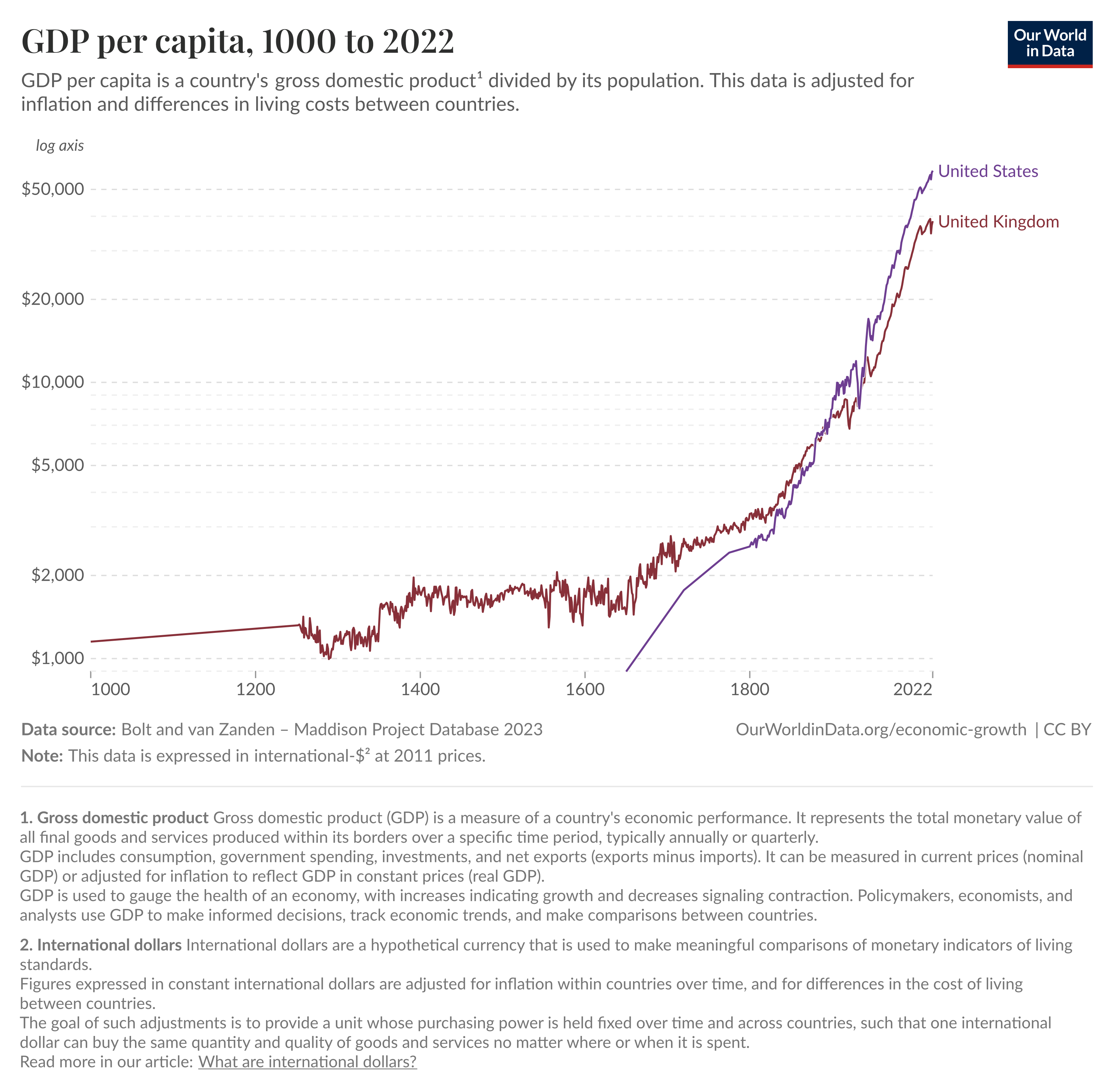
And wow did it work. Note the log scale. Average income is up a factor of 20 from Smith’s time. And GDP is a vast understatement of the benefits (consumer surplus) of growth. Lifespan and child mortality alone make the point. From thousands of years of misery, just a little economic freedom has brought us wonders. Even Smith’s Britain was full of restrictions on who could be in what business, what price they could charge, and so on. And the imperfect freedom we have now gives one hope that even more freedom can provoke additional wonders.
I generally stick to the practical case, not the moral case. We do not have to argue freedom vs. prosperity. We are lucky that the cause and effect is devastatingly true. But the moral case for freedom adds to its practical case. And underlies it as well. Societies that genuinely believe all wealthy people are evil, and the act of running a profitable company reprehensible, that instead prize redistribution especially of other people’s money, will not long allow economic freedom to prosper.
Freedom is also the only “ism”, the only vision for the economic organization of society, that is not in the end predicated on violently taking from A and giving it to B.
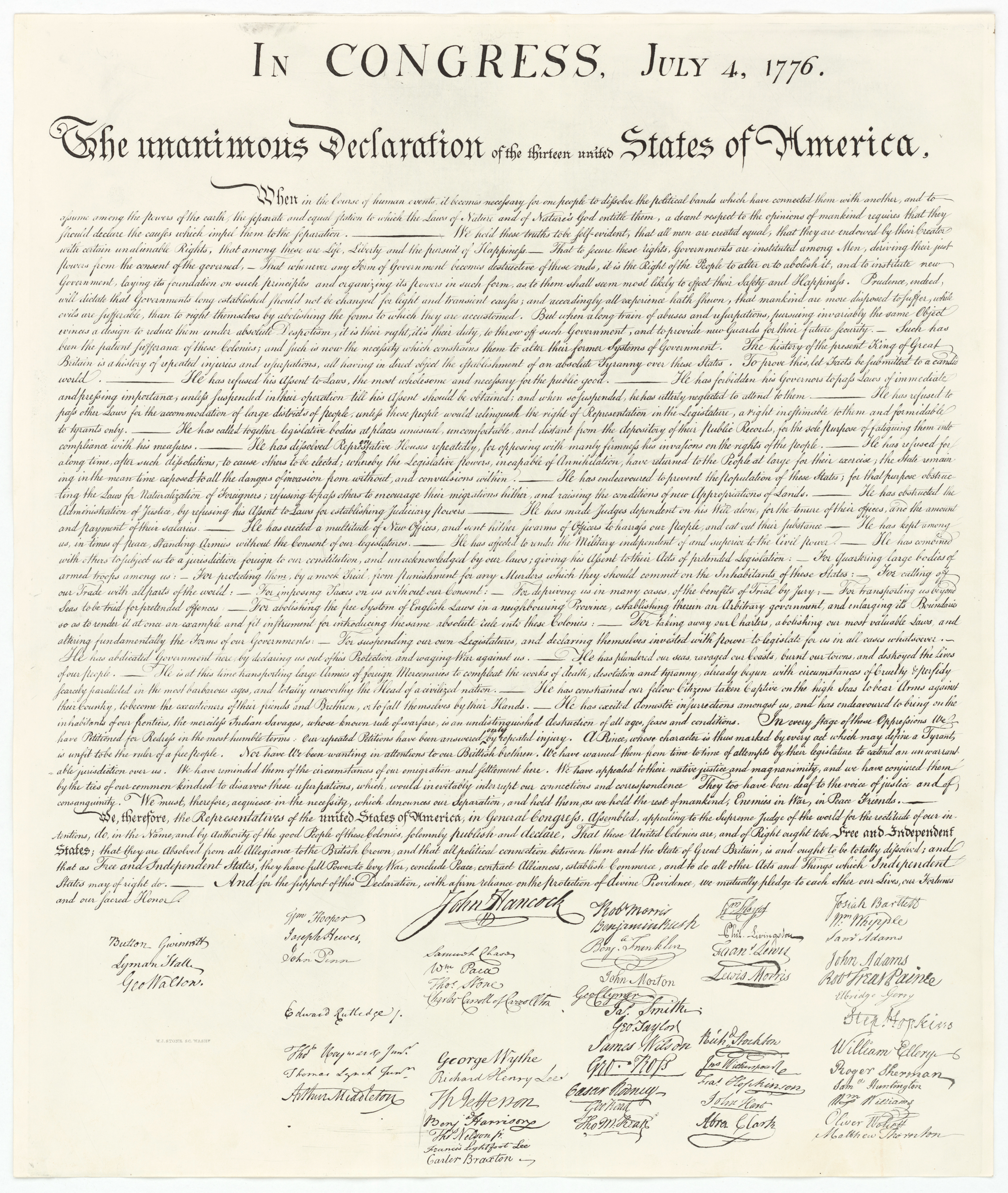
This year is also the 250th anniversary of Declaration of Independence. Our country’s founders shared a similar vision: rather than build a country around the hope that people and especially politicians would act benevolently, in a way they have not done for the last hundred thousand years or so, instead design a political system that channels self-interest to decent public outcome, as Smith points out that a free economic system does. That worked out pretty well too.
If we can keep it.
Remember: the vast majority of investors in venture capital comes from institutional investors. For example, state pension funds. While people complain about individual wealth, it’s funding their retirement and other benefits. Success is in our best interest to raise the standard of living.
I have a positive statement and a normative question:
The US has seen wealth concentrate since the 1980s; the magnitude is debated, but assume it’s significant.
Too much wealth concentration (hard to define a specific level) poses real political risks.
How do we attack that issue while realizing the social benefits of individual wealth?