

Interest-paying electronic money, completely safe without deposit insurance, would be a great thing. For example, Silicon Valley Bank would never have had huge uninsured deposits that ran if there had been an easy safe place for large depositors to put their money.
But the Fed and other central banks and regulators denied us narrow banks (banks that invest deposits in reserves), segregated accounts (accounts invested in reserves, walled off from failure of the bank), money market funds with fast payment services, or useful (large-denomination, interest-paying) central bank digital currency. Interest-paying stable coins (backed 100% by short-term treasury securities) are the latest attempt to reinvent this wheel and drive around regulatory obstacles. But the Clarity Act just failed, over the question whether stablecoins can pay interest. Why not? From the Wall Street Journal,
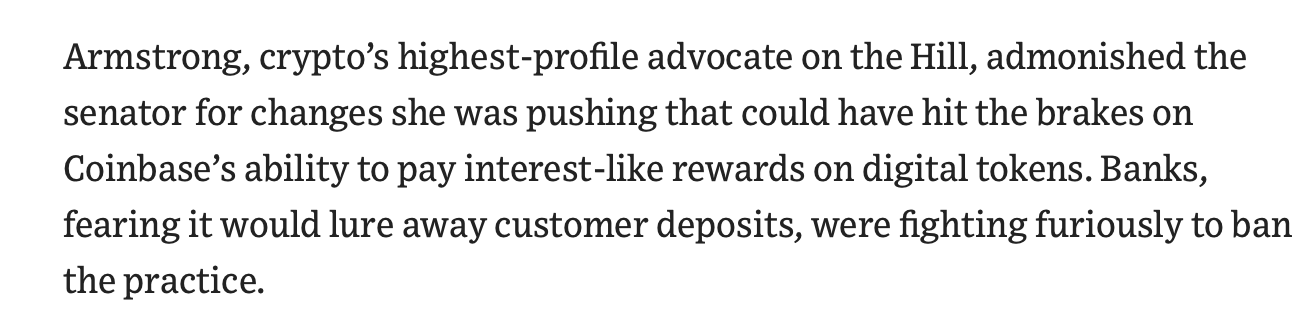
Well, now I’m glad that’s all out in the open, and we can forget the long winded arguments about some vague threat to financial stability or the public interest. Banks don’t want competition, which would force them to pay interest on checking deposits. Plain and simple.
(Some think that banks, protected from deposit competition, turn around and offer cheaper loans out of the goodness of their hearts. Nice theory. If you want to subsidize loans, subsidize loans, don’t give an oligopoly a protected market and count on good will.)
Keep It Simple. Complexity adds risk. We saw in 2008 what happens when complexity adds risk that is not understood.
The payment account the Fed proposed in May keeps that door shut too, since it pays no interest on balances. TNB waited over six years before the New York Fed turned down its master account in December 2023.